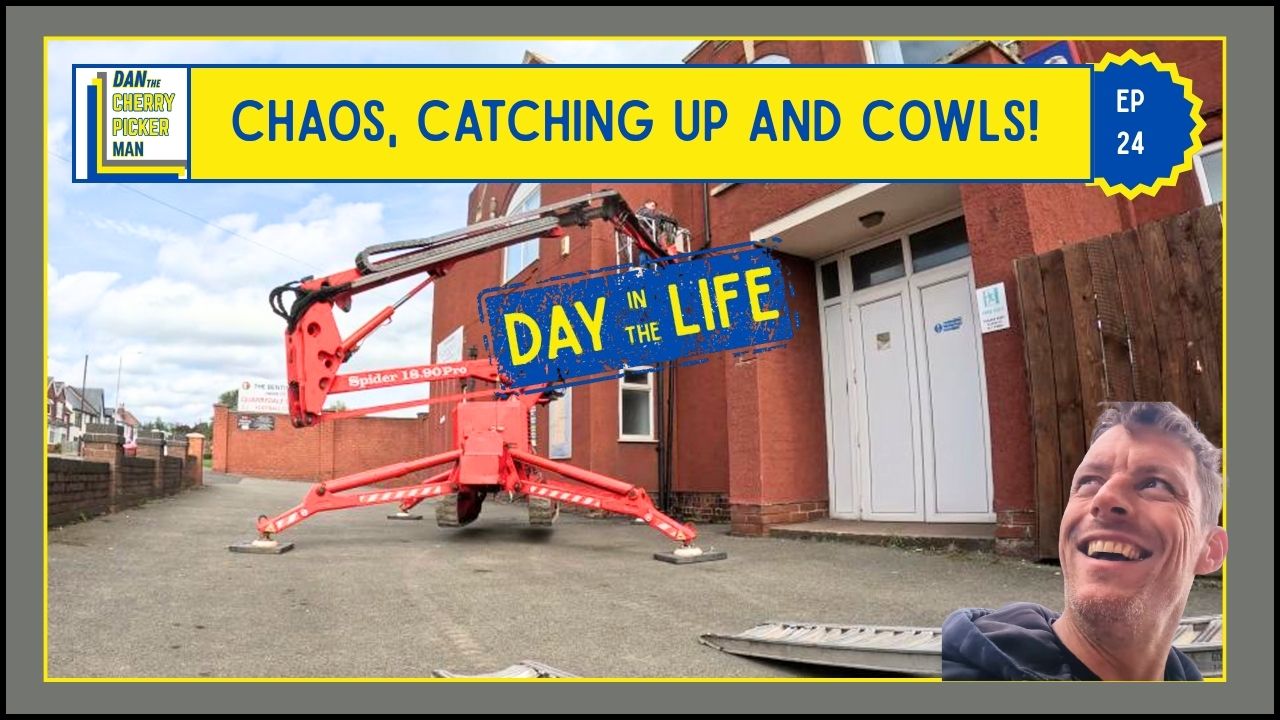
Some weeks test your patience more than others. This one started with relentless rain, gusty wind, and the kind of weather that makes you question whether you’ll earn anything at all. But when you’re self-employed and the diary’s already taken a hit, sometimes you’ve just got to brave it and get on with the job.
In this video, I head out in borderline conditions to carry out a chimney liner drop using a tracked spider cherry picker, followed by a second day on a gutter clearance job where an unexpected machine issue nearly caused bigger problems. It’s a proper behind-the-scenes look at real decision-making on site, the bits you don’t always see on social media.
👉 You can watch the full video here to see exactly how it all played out.
Braving the Weather for a Chimney Liner Drop
The first job of the week took me over to Nottinghamshire for a chimney liner drop, despite the weather being far from ideal. Rain doesn’t usually bother me you can get wet and crack on but wind is where things can quickly become unsafe when working at height.
Access on this one was tight. The machine had to go through gates, round vehicles, across wet grass, and then boom over a pergola to reach the chimney. With the ground already soft, boards were essential to protect the lawn and avoid leaving track marks.
This kind of work falls squarely into chimney maintenance and repair, and it’s exactly where access using a cherry picker comes into its own fast setup, minimal disruption, and no scaffold left on site for weeks.
Once the machine was set up, it was a case of harness on, tools ready, and carefully dropping a tape down the flue to confirm measurements before lowering the liner. The stove fitter I work with prefers bringing multiple liners to minimise waste a sensible approach that saves money in the long run.
The Part People Don’t See: Packing Down Safely
With the liner dropped and the cowl securely fitted, the job itself was done but that’s not where the risk ends. As the weather started turning again, it was time to come down promptly and pack away properly.
Packing down a cherry picker in bad weather is just as important as the work at height. Outriggers in, careful tracking back onto the driveway, collecting the boards, and loading onto the trailer all while keeping an eye on gusts of wind that can easily whip materials out of your hands.
This sort of controlled, safe working is something customers often don’t see, but it’s crucial on jobs involving access using a cherry picker.
A Second Day, Better Weather… and a New Problem
I didn’t want to leave the week with just one job, so the following day I headed out to clear gutters on a large property. The weather had improved massively sunshine, calmer wind but it didn’t take long for a different issue to show itself.
While setting up for the gutter clearance work, I noticed a hydraulic pipe on the machine rubbing against the chassis. Over time, the protective sleeving had crept up, leaving the rubber exposed. That rubbing had already worn through to bare steel, and rust had started to form.
This is exactly how small, easily missed issues turn into expensive breakdowns if they’re ignored.
An Improvised Repair (and an Honest Explanation)
The location of the pipe meant it wasn’t an ideal fix. I had to raise the first boom and access the area from ladders not something you’d choose to do unless necessary. The pipes really need replacing properly, but that wasn’t an option there and then.
Instead, I carried out a temporary preventative repair:
- Cleaned and dried the exposed steel
- Sealed it to prevent further rusting
- Repositioned protective sleeving to stop continued rubbing
It’s not pretty, and it’s not a permanent solution but it should prevent things getting worse until a full repair can be done. This kind of honest, real-world problem solving is part of owning and running your own kit.
If you want to see the issue and the fix close-up, watch the full video here it’s all shown and explained in detail.
Catching a Track Issue Just in Time
Later on, while tracking the machine round site, I spotted another potential headache: one of the tracks had started to pull out of its runners. Catching it early meant I could carefully reverse and let it pop back into place.
Miss that moment, and you’re looking at wasted time, frustration, and a track refit you really don’t want on a working day.
Final Thoughts
This video isn’t about perfect jobs or polished outcomes. It’s about:
- Making sensible calls in poor weather
- Working safely at height
- Spotting machine issues before they become failures
- Being honest about temporary fixes versus proper repairs
Whether you’re a homeowner curious about how this work is actually carried out, or a tradesperson who’s been there and done it, there’s plenty to take away from this one.
If you’ve not already, give the video a watch, and feel free to leave a comment especially if you’ve dealt with similar problems yourself.
Follow Me Online:
• 🌐 Website: www.dji-uk.co.uk
• 🎥 YouTube: @dan_cherrypicker_man
• 🎵 TikTok: @dan_cherrypicker_man
• 📸 Instagram: @dan_cherrypicker_man
• 👍 Facebook: Dan the Cherry Picker Man
• ⭐ Google Business Page: DJI High Access Services – Google Search
• 🛒 Amazon Shop: https://www.amazon.co.uk/shop/danthecherrypickerman?ref_=cm_sw_r_cp_ud_aipsfshop_0H3MM4YGDVAPRTXQJAYV_1
My workwear is sponsored by Granite Workwear, and all of the clothing I’m wearing in the video can be purchased on their website: Workwear Clothing Supplier | Protective Safety Clothes